

Vision
ARI aims to be agile, capable, efficient, and well-resourced in advancing technologies that improve the human condition.
Mission
ARI seeks to move the DECIMAL point, affecting an order-of-magnitude change to the status quo.
What is Advanced Research?
The time for "moving the needle" has passed. We must now move the DECIMAL point, affecting an order-of-magnitude change to the status quo.
ARI's advanced research focuses on solving real-world problems. Our faculty use existing knowledge to develop practical solutions, technologies, or improvements that can be directly implemented in Defense, Energy, Climate, Intelligence, Medicine (i.e., health), Agriculture, and Life (i.e., biology). For ARI, advanced research spans the full spectrum of R&D, from deep-basic science competency (e.g., academics) to product designers / manufacturers that can rapidly respond to solving pressing problems facing the world with holistic expertise and solutions.
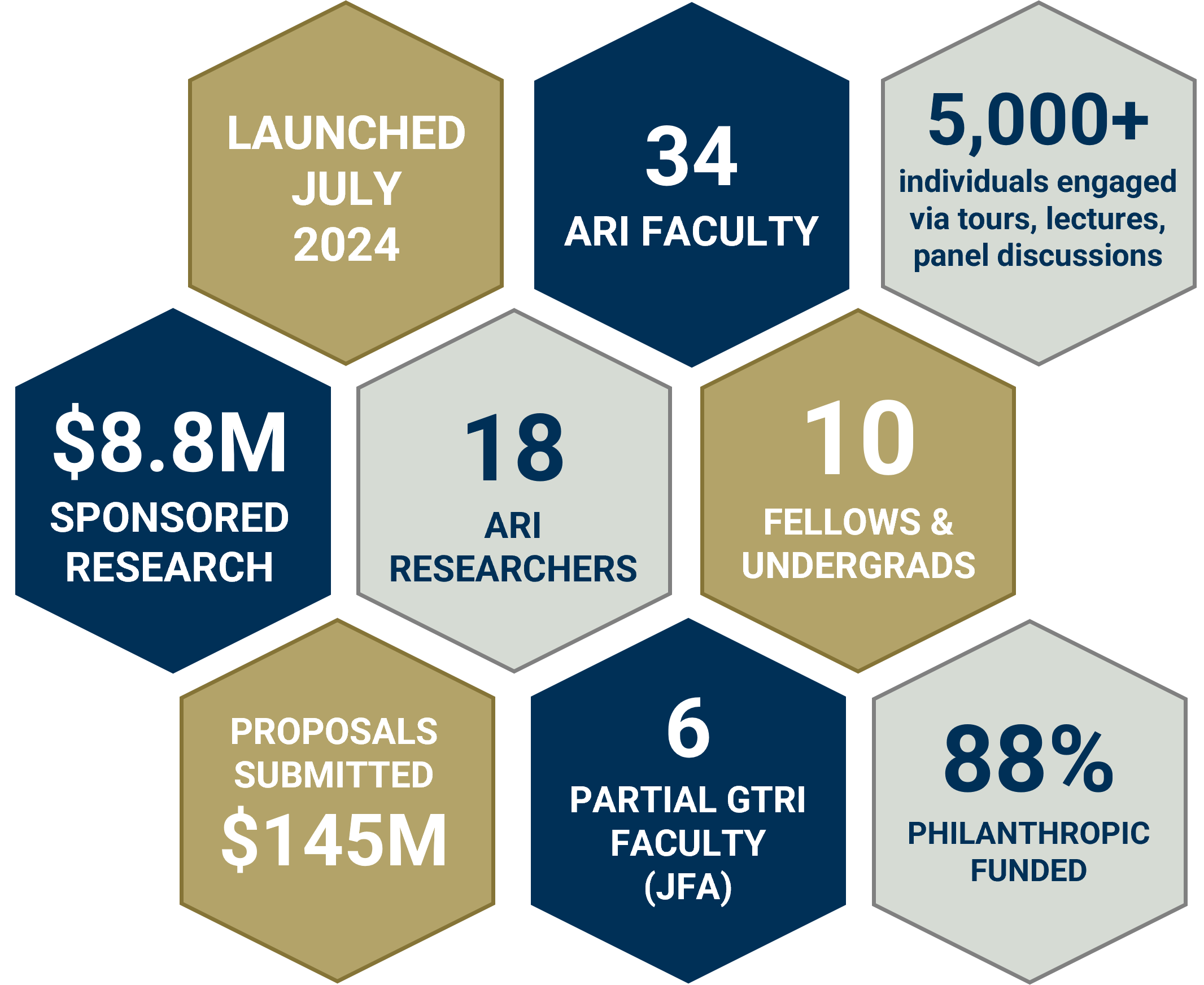
ARI By The Numbers
ARI News
ARI faculty, researchers, and staff are in the headlines!
Emily Weigel Receives National Award for Excellence in Ecology Education
In recognition of her extraordinary teaching, outreach, and mentoring activities, ARI-affiliated researcher Emily Weigel has been awarded the Eugene P. Odum Award for Excellence in Ecology Education by the Ecological Society of America (ESA). Each year, the award celebrates a singleone individual’s sustained, outstanding work in ecology education.
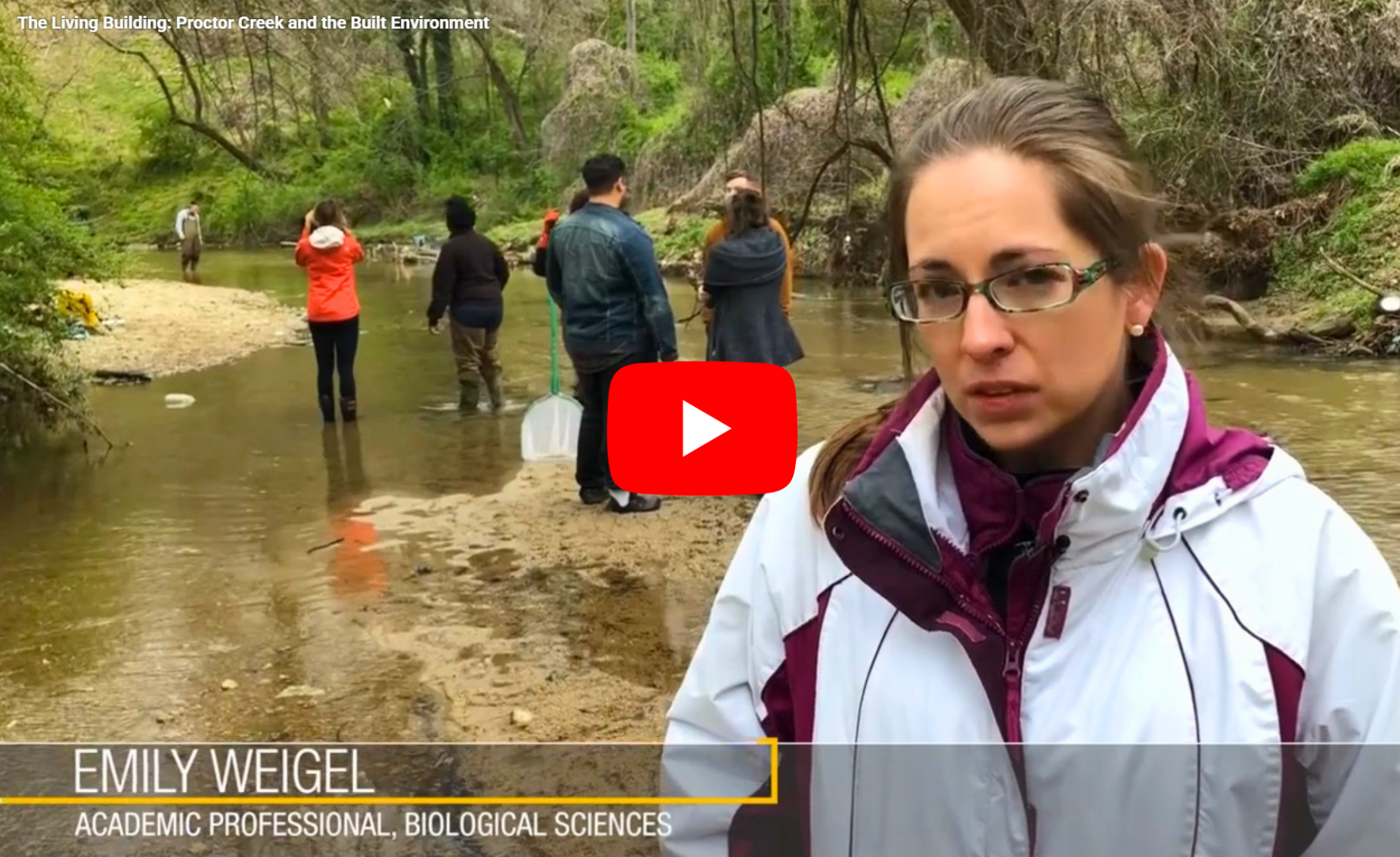
In conjunction with the completion of The Kendeda Building, in 2018 Emily Weigel, Marc Weissburg, and Georgia Tech students studied the impact buildings and construction have on biodiversity in the ecosystem.
Weigel is among 10 individuals selected nationwide for annual ESA awards. “This year’s award recipients have each contributed something important to ecology, often in very different ways,” says ESA President Peter Groffman. “These are ecologists whose efforts have shaped the field, supported colleagues and created opportunities for others. I’m glad to see that kind of work acknowledged.”
Click here to learn more.
Doing the Dirty Work of Sustainability
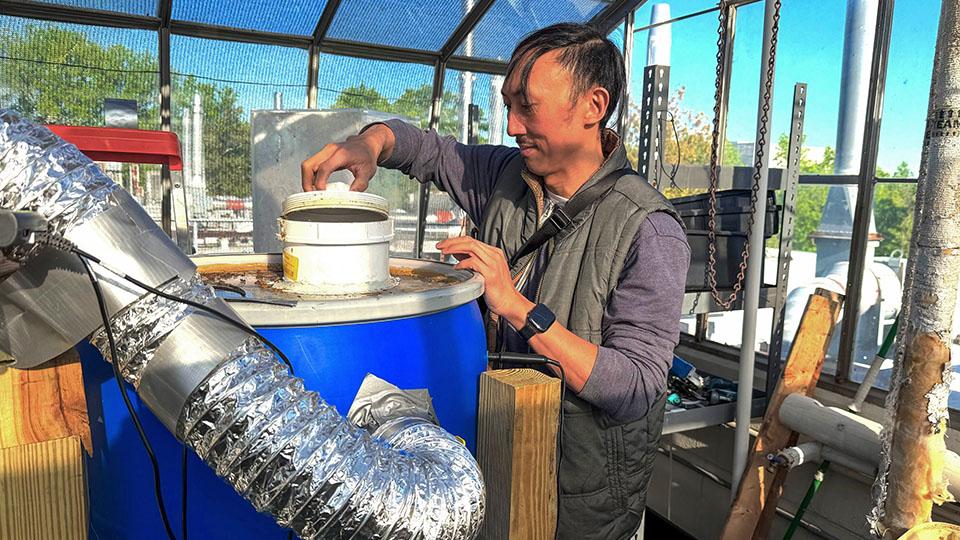
ARI-affiliated professor David Hu and his students are improving campus sustainability, one pound of food waste at a time. His senior-level biology class this semester had a unique assignment: feed food waste to black soldier fly larvae, collect the organic byproduct (called “frass”), and analyze the results. What they’ve found so far is a composting method with the potential to dramatically reduce harmful greenhouse gas emissions while producing a nutrient-dense fertilizer.
Click here to learn more.
Georgia Tech Selected for EcoCAR Challenge
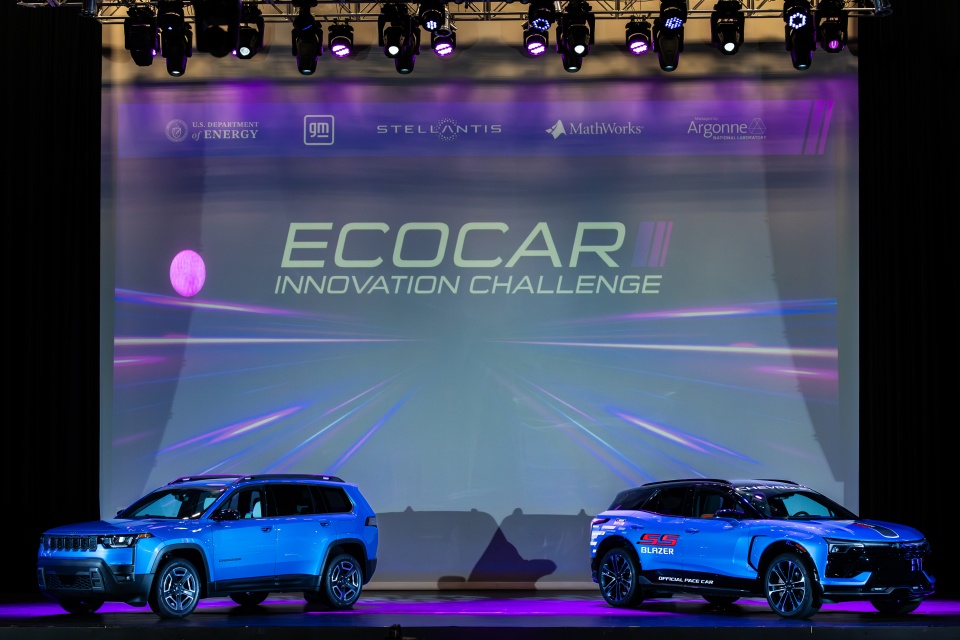
ARI-affiliated professor Antonia Antoniou is advising more than 50 undergraduate and graduate students from six of Georgia Tech’s Colleges as they prepare to compete in the EcoCAR Challenge, a national program connecting students with automotive industry leaders. Selected for a fourth consecutive cycle, Georgia Tech is one of 20 universities working to advance next-generation mobility solutions using technologies like AI, machine learning, and advanced vehicle systems.
Click here to learn more.
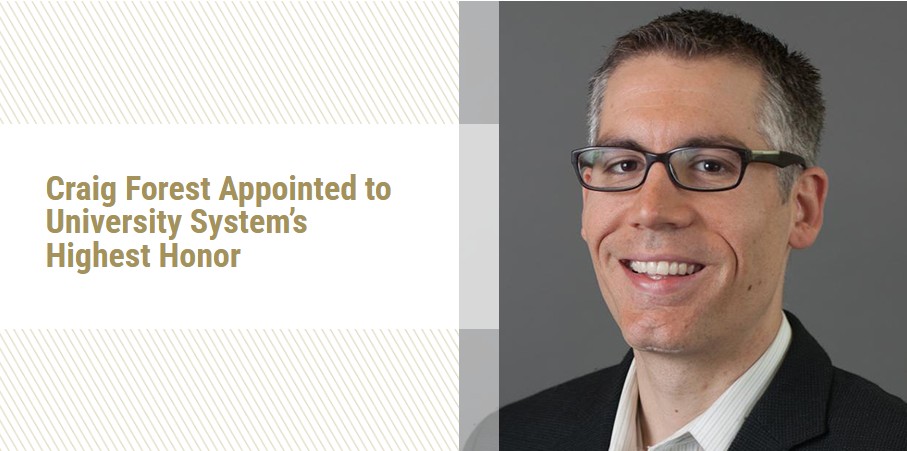
May 13, 2026
By Joshua Stewart
Craig Forest, professor in the George W. Woodruff School of Mechanical Engineering, has been appointed Regents’ Entrepreneur by the University System of Georgia Board of Regents.
Regents’ titles are the highest distinctions from the system and recognize faculty members for academic, innovation, and entrepreneurial excellence. Altogether, the Regents honored nine Georgia Tech faculty members and reaffirmed the appointments of six others. Georgia Tech President Ángel Cabrera approved second renewals for four additional faculty members.
Forest develops small, high-throughput robotic instruments to advance genetic research and neuroscience. His team has created tools that detect viruses, personalize drug dosages to prevent heart attacks, and speed genetic engineering processes in the lab. They’ve also advanced micro-fabrication techniques, allowing them to model the flow of fluids and photons and identify neurons in the brain.
Forest’s lab created a robot that automates a tedious and time-consuming research technique called patch clamping, which allows scientists to measure the electrical properties of individual cells. Life sciences company Sensapex has licensed their patented technology.
Forest co-founded Tech’s original student-run makerspace, the Flowers Invention Studio. He also co-created the Georgia Tech InVenture Prize, one of the nation’s largest invention competitions for undergraduates.

Shan Arora was one of ten recipients of the 2026 Living Future Hero Award during the Living Future Conference in Seattle. The award celebrates the exemplary leadership required to combat climate change and social inequalities in the regenerative design community. Heroes are Living Future Members who go above and beyond in advancing regenerative buildings, sustainable materials, and equitable organizations through both advocacy and practice, while championing Living Future projects and products within their communities. Click here to learn more.
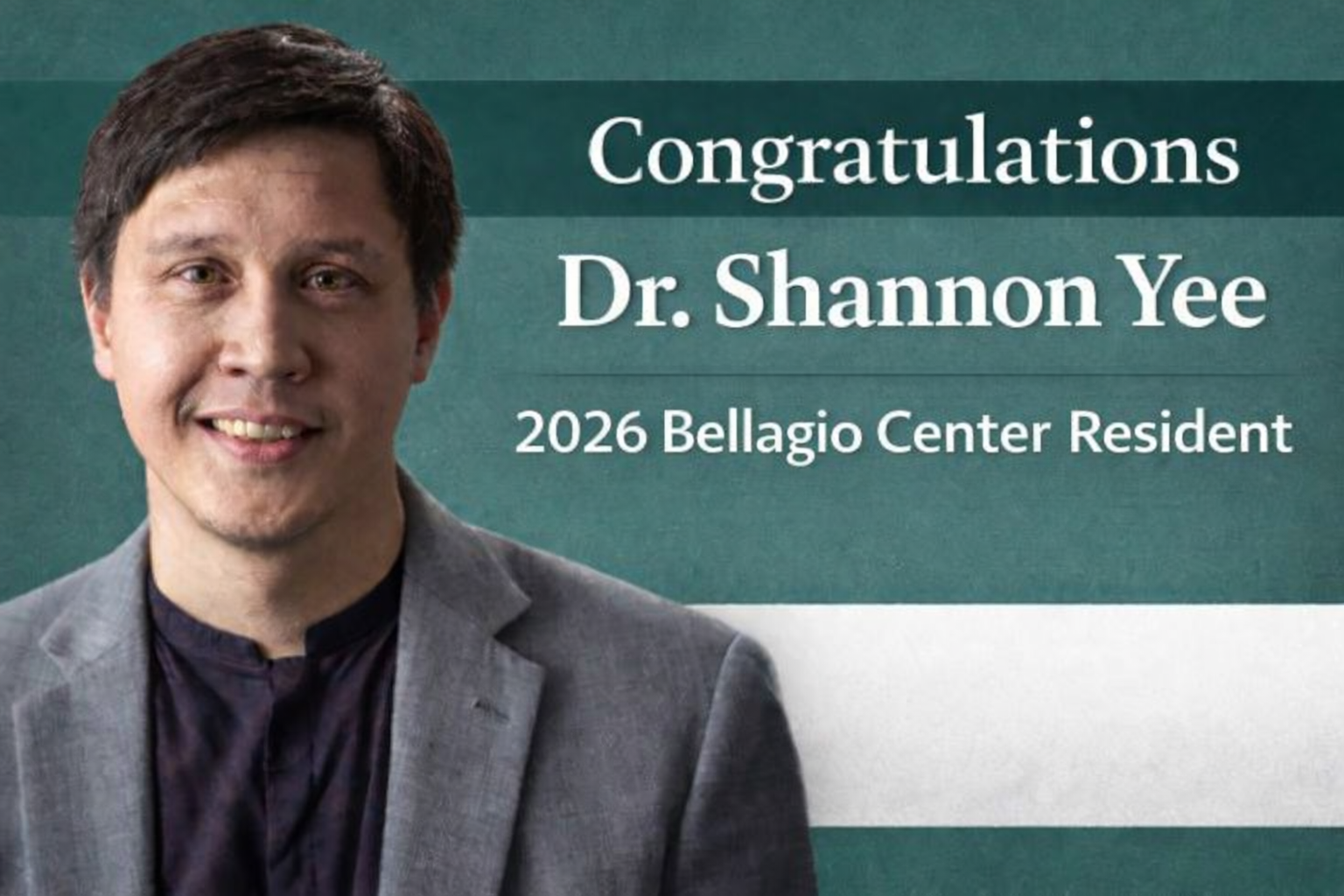
The Rockefeller Foundation has announced that 87 leaders from six continents are joining the Bellagio Center Residency Program’s 2026 Class, including Shannon Yee. Representing a range of critical expertise and professional backgrounds, the 2026 Class joins a program that has hosted more than 5,000 trailblazers and changemakers from more than 140 countries, including 18 Nobel Laureates, since 1959. The Rockefeller Foundation’s Bellagio Center Residency offers a combination of uninterrupted work time in a unique environment, alongside the opportunity for collaboration and interdisciplinary exchange. Participants are connected to a global network of alumni, all of whom have demonstrated a commitment to creating lasting impact in their communities and around the world. Dr. Yee will focus his time at the Bellagio Center to work on advancing solutions to humanity's critical challenges that deliver order of magnitude change to the status quo.

Organizational Information
ARI operational offices are located in the Kendeda Building for Innovative Sustainable Design, Room194, 422 Ferst Dr NW, Atlanta, GA 30313
Dept number: 104; Cost center: 520
Campus Mail Stop: 4019